
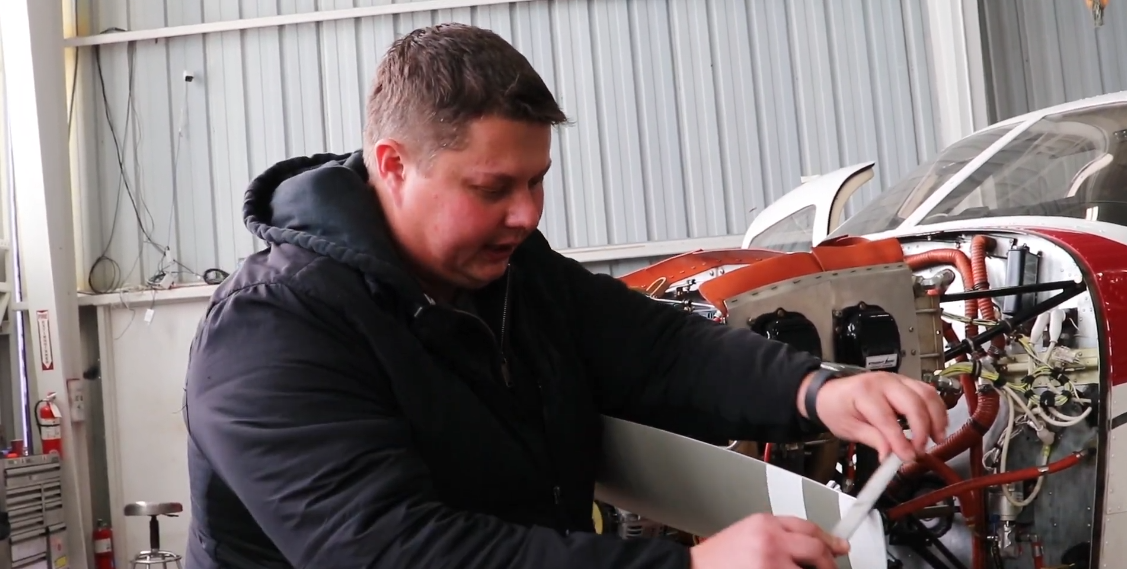
Working as mechanics at Trust Flight, we often encounter propellers that need dressing during 100-hour inspections.
This common maintenance task helps address normal wear and tear from rocks and debris that hit the propeller blades during flight. You can usually spot this damage as small chips or torn areas along the leading edge of the blades.
Before starting any work on propellers, safety is our top priority. We always ensure the engine cannot accidentally start by cutting off fuel, turning the mixture lever to the off position, and disconnecting spark plug leads.
After evaluating the damage to determine if it’s field-repairable, we carefully file down discrepancies while maintaining the blade’s original shape and integrity. For deeper nicks, we work more thoroughly to ensure they won’t develop into cracks that could compromise the propeller’s safety.
Key Takeaways
- Always secure the engine before working on propellers to prevent accidental starts that could cause serious injury.
- Normal propeller wear appears as small chips and tears along the blade edges that can be filed down if they meet repair criteria.
- After dressing the blade, apply a protective coating to the bare metal to prevent corrosion and ensure continued airworthiness.
Safety Steps Before Working on Propellers
Stopping the Engine
We need to take several steps to make sure the engine won’t start accidentally while working on propeller blades. First, cut off the fuel to the engine. Then, move the mixture lever to the cut-off position. Always turn off all magnetos completely. If we skip these steps, the propeller might spin unexpectedly, which is very dangerous.
Remember to follow this safety checklist:
- ✓ Cut off fuel supply
- ✓ Set mixture lever to cut-off
- ✓ Turn off all magnetos
- ✓ Verify the engine cannot start
Removing Spark Plug Leads
After shutting down the engine controls, we must disconnect all spark plug leads. This step is extremely important! Even with other precautions in place, connected spark plugs could allow the engine to start unexpectedly.
Why this matters: If the spark plug leads remain connected while other systems are turned on, the propeller might suddenly start spinning. This creates a serious safety hazard that could cause severe injury.
Always double-check that:
- All spark plug leads are fully disconnected
- The leads are secured away from their connections
- No accidental reconnection can occur during your work
Once we’ve completed these safety steps, we can begin evaluating and dressing the propeller blades safely.
Understanding How Propellers Wear
Propellers face many challenges during flight operations. We need to inspect them regularly during 100-hour inspections to ensure they’re safe and working properly.
Before touching any propeller, always make sure the engine can’t start accidentally. Turn off the fuel, pull out the mixture lever, switch off the magnetos, and disconnect the spark plugs.
How to Spot Normal Wear
Normal propeller wear happens when small rocks and debris hit the blades during takeoff and landing. When examining a propeller, we look for chips along the leading edge. If you look closely at both sides of the blade, you’ll often see areas worn down by small rocks. This kind of damage is expected and can usually be addressed during regular maintenance.
Safety tip: Always evaluate damage carefully according to the manufacturer’s guidelines to determine if it’s field-repairable.
When filing down normal wear marks:
- Keep the original shape of the blade
- Make light, smooth motions
- Work from the root toward the tip
- Don’t remove too much material
When Damage Goes Beyond Normal Wear
Sometimes propellers suffer damage that exceeds what we consider normal operational wear. In these cases, the propeller might need professional attention beyond what we can do in the field.
If you find any of these issues, the propeller likely needs specialized repair:
- Deep cracks (not just surface nicks)
- Damage that would require removing too much material
- Bends or twists in the blade
- Damage that changes the blade’s shape or integrity
![Damage comparison]
When damage is too severe, the propeller must be removed from the aircraft and sent to a certified propeller shop for professional overhaul or repair. Always remember that proper evaluation is critical – if you’re unsure whether damage is field-repairable, consult with a specialist.
After completing any field repairs, apply a protective coating to the bare metal areas to prevent corrosion. This helps maintain the propeller’s integrity between inspections.
How to Check and Fix Your Propeller
When to Fix Propeller Damage
Propellers can get damaged in normal flying. We need to check them carefully during inspections. Sometimes we can fix small damage ourselves. Other times, we need professional help.
What We Can Fix in the Field
Before working on propellers, we always make sure the engine won’t start accidentally. Turn off the fuel, mixture lever, and magnetos. Disconnect the spark plugs too. This keeps us safe from serious injury.
Normal wear on propellers usually shows up as small chips and nicks on the leading edge. When rocks and debris hit the blade, they create tiny damaged spots. We can repair these if they’re not too deep.
To fix small damage:
- Use a file to smooth down chips and nicks
- Start away from the blade tip
- Use light motions to maintain the original shape
- Work from the root to the tip to reduce stress points
- Be careful not to remove too much material
Important safety tip: Never change the blade’s overall shape or integrity when making repairs.
When to Send Your Prop to Experts
Some damage is beyond what we can fix in the field. Professional repair shops should handle:
| Type of Damage | Why Send to a Shop |
|---|---|
| Deep nicks that may be cracks | Could affect structural integrity |
| Bent blades | Requires specialized equipment |
| Too much material already filed away | Makes propeller unsafe |
| Complex damage | Needs expert evaluation |
When evaluating damage, we look at the manufacturer’s criteria or approved data to determine if it’s field-repairable. If we’re unsure whether something is just a nick or might be a crack, it’s best to have professionals check it.
After filing, we use fine abrasives like Scotch-Brite to smooth everything out. This prevents stress concentration points that could lead to cracks. Once the metal is bare, apply protective coating to prevent corrosion.
Fixing Your Propeller
Filing Methods
When fixing propeller blades during a 100-hour inspection, safety must come first. We always make sure the engine can’t spin by cutting off fuel, setting the mixture lever to off, turning off magnetos, and disconnecting spark plugs. This prevents dangerous accidents that could happen if the propeller suddenly moves.
Normal wear on propellers often comes from rocks and debris hitting the blades during flight. If you look closely at a blade, you’ll notice small chips along the leading edge. The back side of the blade typically shows damage from rocks as well. We need to carefully check these areas to determine if we can fix them ourselves or if the propeller needs professional repair.
Keeping the Blade’s Shape
While filing, our main goal is to maintain the original shape of the blade.
We work with light, careful movements to preserve the blade’s design and strength. Some damaged spots may need more attention than others, but we’re always cautious not to change the blade’s original profile.
When we spot deeper nicks, we carefully examine them after removing paint to make sure they’re just surface damage and haven’t developed into cracks. If it’s just a nick, we can usually file it down safely. We must be careful not to remove too much material, as this could make the propeller unusable.
Starting at the Base and Moving Outward
We prefer to file from the root (base) of the blade toward the tip.
This approach follows the natural stress pattern of the blade and helps prevent damage from concentrating in small nicks that could later become cracks.
After filing, we use Scotch-Brite pads to smooth the surface and ensure no gouges remain. This important step prevents stress points from forming. Once everything is smooth, we apply a protective coating to the bare metal to prevent corrosion.
- Safety checklist before starting:
- Turn off fuel
- Cut off mixture lever
- Turn off magnetos
- Disconnect spark plugs
Working With Deep Prop Nicks
When inspecting airplane propellers during 100-hour inspections, we often find nicks and damage on the blades.
Before starting any work, we must ensure safety by cutting off fuel, placing mixture levers in the off position, turning off magnetos, and disconnecting spark plug leads.
This prevents accidental engine starts that could cause serious injuries.
Propeller blades can develop damage from normal wear due to rocks and debris hitting the leading edge during flight. We need to carefully examine each nick to determine if it’s something we can fix in the field or if the propeller requires professional shop repair.
Finding Fixable Damage
When examining propeller blades, we look closely at the leading edge where most damage occurs. After removing paint, we can properly assess each nick:
Good signs a nick is repairable:
- The nick hasn’t developed into a crack
- The damage is limited to the surface
- The nick can be smoothed with filing without removing excessive material
Filing technique tips:
- Work from the root of the blade toward the tip
- Use light, even strokes to maintain the original blade shape
- Apply more pressure on deeper spots as needed
- Focus on keeping the original plane of the blade intact
After filing, we use Scotch-Brite pads for the final smoothing to ensure no stress concentration points remain. Once smoothed, we apply a protective coating to the bare metal areas to prevent corrosion.
Remember that removing too much material can make a propeller unserviceable, so we must be careful with our filing technique. When in doubt about deeper damage, it’s always better to have the propeller evaluated by a certified propeller shop.
Final Steps for Propeller Maintenance
Using Scotch Brite for Smooth Surfaces
After we file down all the nicks and damage on the propeller blades, we need to make the surface smooth. Scotch Brite pads work great for this final smoothing step.
We carefully rub the pad over the areas we just filed to remove any small rough spots.
This step is really important! A smooth surface helps prevent stress from building up in small nicks or rough areas.
When we use the Scotch Brite, we make sure to maintain the original shape of the blade. The goal is to blend everything together without changing the blade’s profile.
Remember that any deep gouges should be completely removed.
The nick we pointed out earlier is now completely gone after proper filing and smoothing. This means it won’t become a stress point that could develop into something worse later.
Adding Protective Layers
Once we’ve smoothed the propeller blades, the metal is now exposed and needs protection.
Applying a protective coating is a smart next step that helps:
- Prevent corrosion
- Protect the bare metal
- Extend the life of your propeller
- Maintain aircraft safety
The protective coating creates a barrier between the metal and environmental factors that could cause damage.
We make sure to cover all the areas where we removed material during the filing and smoothing process.
This protective step isn’t just about looks – it’s an important part of maintaining the propeller’s integrity.
Without proper protection, even small amounts of moisture can start the corrosion process on the exposed metal.
Wrapping Up Your Prop Maintenance Skills
We’ve covered the important steps for dressing propeller blades during routine 100-hour inspections. Safety comes first.
Always make sure the engine can’t start by cutting off fuel, turning off mags, and disconnecting spark plugs. A spinning propeller is extremely dangerous!
Prop dressing addresses two main issues: normal wear from rocks and debris, and more significant damage that requires evaluation.
When examining your prop, look closely at the leading edge and back side for chips and tears. Remember that not all damage can be fixed in the field. Serious problems require removal and professional shop repair.
When filing damage, work carefully to maintain the blade’s original shape and integrity. We recommend working from the root to the tip to prevent stress concentration.
Light, smooth motions work best for minor nicks, while deeper spots need more attention. A scotch brite pad helps create the final smooth finish.
After completing your work, don’t forget to apply protective coating to the bare metal areas. This simple step helps prevent corrosion and extends the life of your propeller.
With practice, you’ll become more comfortable identifying repairable damage and maintaining your propeller blades properly. These skills help ensure both safety and performance in your aircraft.