
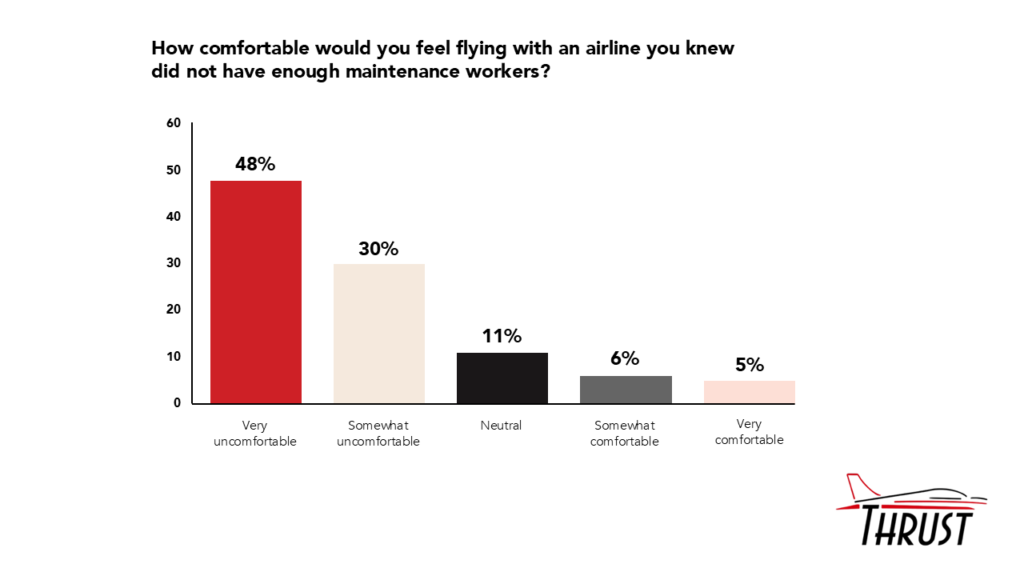
78% of U.S. adults say they’d feel uncomfortable flying with an airline they knew did not have enough maintenance workers.
Most travelers judge an airline by what they can see: how boarding feels, whether the flight leaves on time, how the crew handles a disruption. But the work that protects safety and keeps flights running smoothly usually happens out of sight, which is exactly where risk can quietly grow.
Behind the scenes, aviation is dealing with a deeper workforce challenge. Reliable air travel depends on a strong pipeline of trained professionals across the system, and aircraft mechanics are a crucial part of that chain.
New findings from the Thrust Flight 2026 Aircraft Mechanic Shortage Survey highlight the gap. Awareness of the issue is low, but once people learn that airlines are struggling to hire enough mechanics, they quickly connect it to safety and delays, and many say it would affect their comfort level and which airline they choose.
Purpose of this Study
To better understand how Americans think about the aircraft mechanic shortage and what they believe it could mean for future travel, Thrust Flight ran the Thrust Flight 2026 Aircraft Mechanic Shortage Survey in January 2026. Using the third-party platform Pollfish, the survey reached 1,000 U.S. adults ages 18+ and measured baseline awareness, first reactions, perceived safety and reliability impacts and how maintenance staffing, training investment and transparency shape trust and airline choice.
The goal of the study was to quantify the awareness gap and test whether people connect staffing shortfalls to delays, cancellations and perceived safety, as well as whether they back solutions like more investment in training and staffing. The results point to a clear shift once the issue is explained: low awareness quickly turns into high concern, and maintenance staffing becomes a visible driver of trust and airline selection.
Key Findings of the Thrust Flight 2026 Aircraft Mechanic Shortage Survey
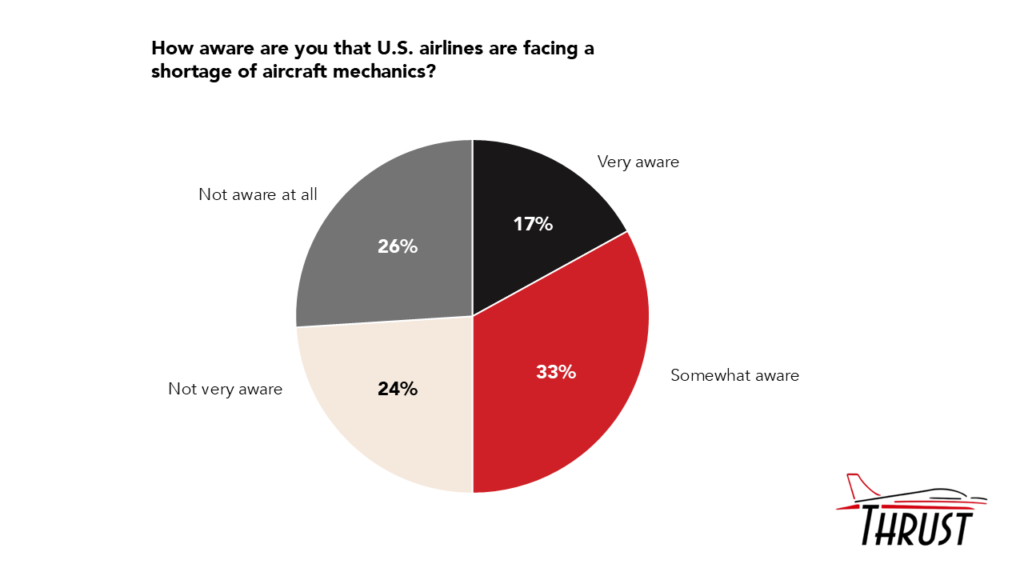
- Awareness Starts Out Low: Only 17% of U.S. adults say they are “very aware” of the aircraft mechanic shortage, while 26% say they are “not aware at all.”
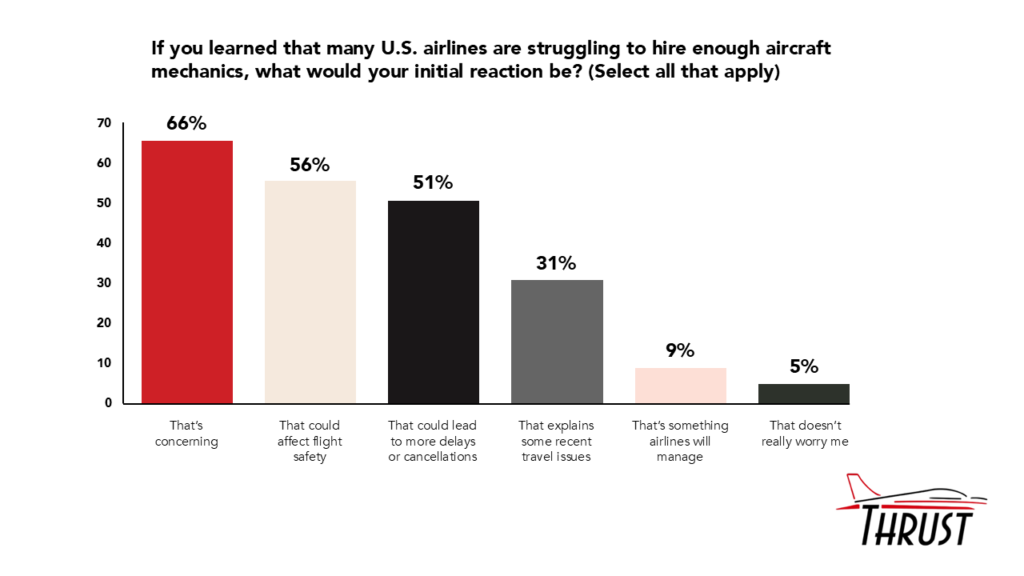
- The Shortage Raises Safety and Delay Fears: After hearing many U.S. airlines are struggling to hire enough aircraft mechanics, 66% say the shortage is “concerning,” and 56% link it to flight safety and 51% to delays and cancellations.
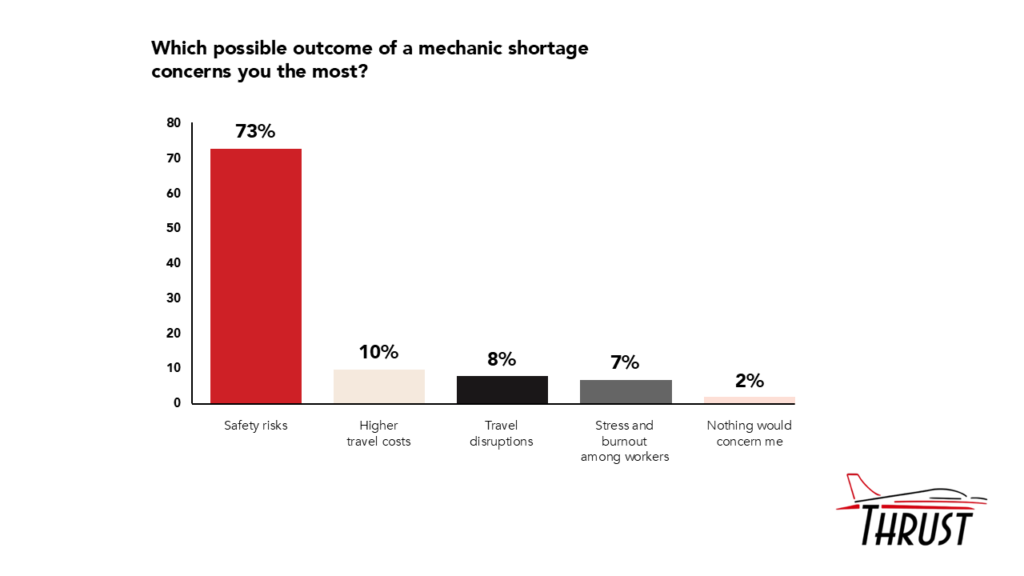
- Safety Is The Main Concern: When asked to choose their single biggest concern with a mechanic shortage, 73% of U.S. adults pick “safety risks.” Only 2% say nothing about a mechanic shortage would concern them.
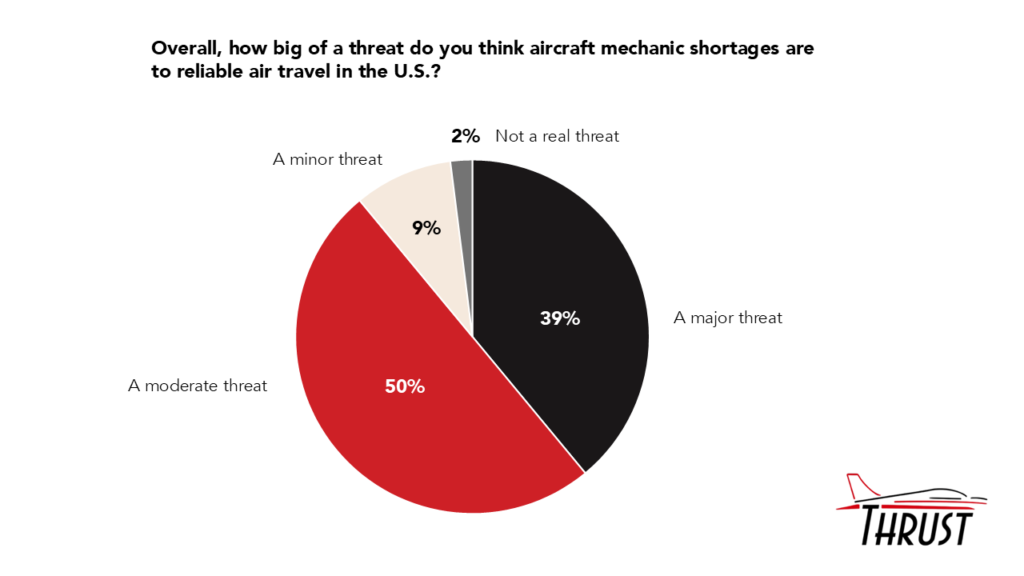
- Reliability Risks Feel Widespread: A total of 89% say mechanic shortages are a “major” (39%) or “moderate” (50%) threat to reliable U.S. air travel.
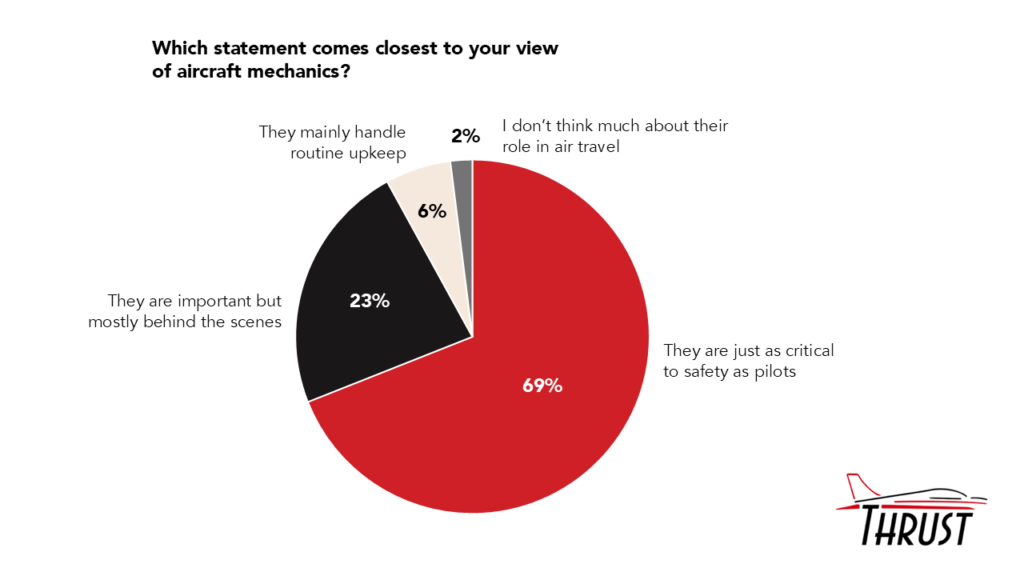
- Mechanics Rank Alongside Pilots: A majority of respondents (69%) say aircraft mechanics are just as critical to safety as pilots.
- Understaffing Creates Immediate Discomfort: 78% would feel uncomfortable flying with an airline if they knew it did not have enough maintenance workers.
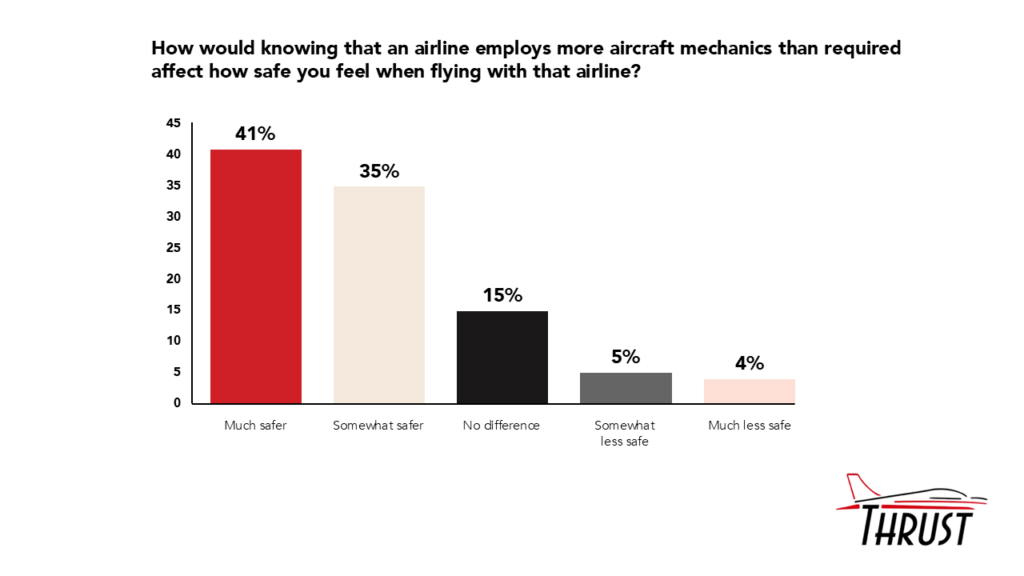
- Extra Staffing Signals Added Safety: 76% say they would feel safer flying with an airline if they knew it employs more aircraft mechanics than required.
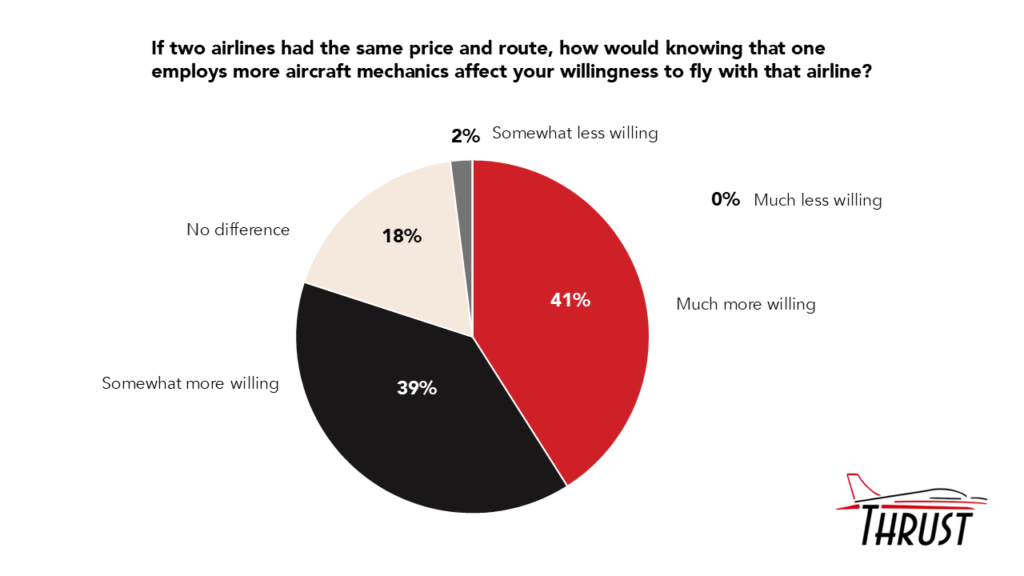
- Staffing Becomes a Tie Breaker: If price and route are the same, 80% are more willing to choose an airline that employs more mechanics.
- Confidence in Investment is High: Nearly all respondents (95%) say they are “very” or “somewhat” confident that if airlines invested more in mechanic training and staffing, flight reliability and safety would improve.
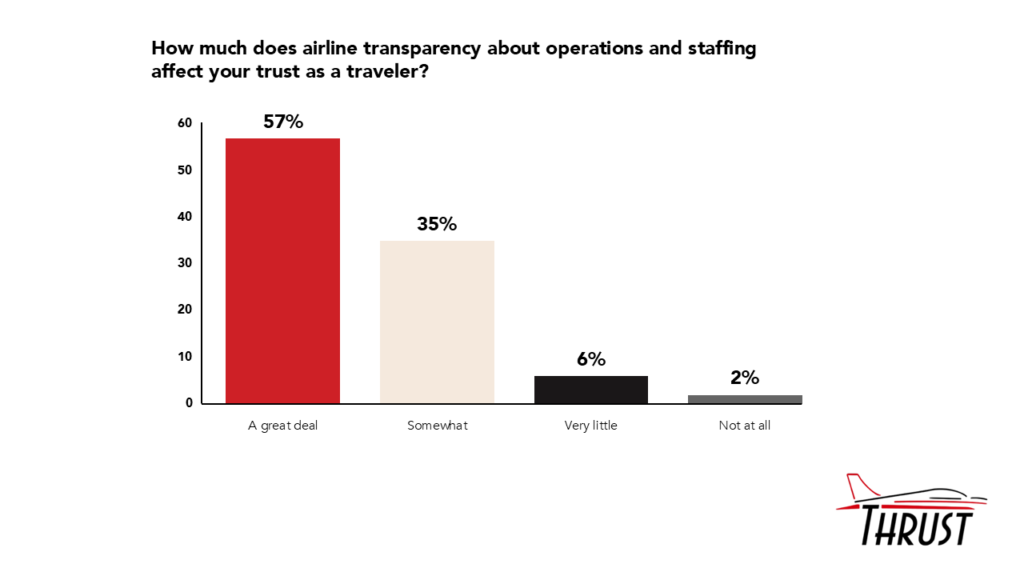
- Transparency Builds Trust: A combined 92% say transparency about operations and staffing affects their trust “a great deal” or at least “somewhat.”
“Travelers don’t need to be aviation experts to know when they feel they can trust an airline,” said Patrick Arnzen, CEO of Thrust Flight. “Thrust Flight’s survey shows maintenance staffing quickly becomes a top-of-mind safety and reliability concern once people hear about the shortage. Airlines that invest in training and staffing and communicate with transparency have a real chance to protect confidence and earn traveler preference.”
Low Awareness Creates a Visibility Risk
The mechanic shortage starts as an information gap. Only 17% of respondents say they’re “very aware” of the aircraft mechanic shortage, while 26% say they’re “not aware at all.” That split points to a visibility problem for the industry, especially when staffing constraints can directly affect the travel experience.
Awareness shapes how people interpret flight disruptions. If travelers don’t know a workforce shortage exists, they’re more likely to blame disruptions on everyday airline issues instead of underlying capacity strain. That makes the shortage easier to miss and harder to fix in a way the public recognizes.
Once the issue is explained, the survey results suggest perceptions move quickly from low familiarity to high concern. The gap between what people know and how they respond once informed is one of the clearest threads in the findings, and it helps explain why staffing and transparency play such a central role in trust.
Safety Drives the First Reaction and Remains the Top Concern
The moment people hear that many U.S. airlines are struggling to hire enough aircraft mechanics, concern shows up right away. Most say the shortage is “concerning” (66%), and many link it directly to flight safety (56%) and to delays and cancellations (51%). Even on first exposure, the shortage isn’t treated as a niche staffing issue. People see it as a real risk with practical consequences.
That reaction gets even clearer when respondents have to choose what matters most. Nearly three-quarters (73%) select “safety risks” as their biggest concern, far ahead of any other worry. Almost nobody shrugs it off. Only 2% say nothing about a mechanic shortage would concern them. The pattern is consistent: once the issue is introduced, concern is widespread and the strongest association is with safety.
Reliability Risks Feel Widespread and Mechanics Are Seen as Safety Critical
The data shows broad agreement that the mechanic shortage isn’t a minor operational issue. A combined 89% say mechanic shortages are a “major” (39%) or “moderate” (50%) threat to reliable U.S. air travel. This is a mainstream concern, and it raises the stakes for how airlines protect confidence during a period of workforce strain.
At the same time, respondents clearly elevate the role of mechanics in the safety ecosystem. Most (69%) say aircraft mechanics are just as critical to safety as pilots. That helps explain why reactions to the shortage tilt so strongly toward safety. People aren’t only expecting inconvenience. Many are translating staffing strain into perceived safety and reliability risk.
Maintenance staffing and training aren’t just operational choices. They’re part of how trust is built. When mechanics are viewed as safety critical, staffing shortfalls can quickly turn into credibility issues, and visible commitment to staffing and training becomes a signal of confidence.
Understaffing Makes People Uneasy and Extra Mechanics Build Confidence
When an airline is seen as short on maintenance workers, discomfort is widespread. More than three-quarters of respondents (78%) say they would feel uncomfortable flying with an airline they knew did not have enough maintenance workers. That reaction suggests maintenance capacity can quickly shape how people feel about an airline.
The pattern also runs in the other direction. 76% say they would feel safer flying with an airline if they knew it employs more aircraft mechanics than required. Extra coverage comes across as added reassurance.
Together, the results suggest mechanic staffing levels act as a safety cue. Being short-handed raises discomfort, and having more than required increases perceived safety. People do not need to see a maintenance bay to respond to what headcount implies about readiness and standards.
This also raises the value of transparency. If maintenance capacity is a cue for safety, airlines face pressure to explain how they ensure their maintenance teams are adequately resourced and trained.
Maintenance Signals Now Influence Airline Choice
When routes look interchangeable, maintenance coverage turns into a tie breaker. If price and route are the same, 80% say they’re more willing to fly an airline that employs more mechanics. That suggests mechanic headcount can directly shape preference at the point of purchase.
There’s also a strong belief that investment would make a difference. Nearly all respondents (95%) say they are “very” or “somewhat” confident that if airlines invested more in mechanic training and staffing, flight reliability and safety would improve. This reflects expectations, not proof. People see staffing and training as the lever and expect airlines to treat it as a priority.
Those expectations raise the bar for communication. If travelers believe investment should improve reliability and safety, they will look for signs that airlines are acting. Transparency appears to be one of those signals. A combined 92% say transparency about operations and staffing affects their trust “a great deal” or at least “somewhat.” That makes openness a measurable factor in how trust is built.
Combined, the findings suggest mechanic headcount, training investment and transparency are more than operational inputs. They are cues people use when deciding which airline to trust and choose.
Mechanic Staffing is Becoming a Measure of Trust
The Thrust Flight 2026 Aircraft Mechanic Shortage Survey points to a visibility gap that can quickly turn into a trust issue for the entire aviation industry once travelers understand what’s at stake. Awareness starts low, but once people hear about the shortage, concern centers on safety, reliability and delays. Mechanics are placed in the same safety-critical tier as pilots, and almost nobody says they’d be unconcerned.
That mix of low awareness and high concern has clear implications for what comes next. The shortage isn’t just a staffing headache inside maintenance departments. It’s a strategic risk that touches brand, customer loyalty and the industry’s social license to grow. Workforce planning, training capacity and retention for aircraft mechanics now sit on the same level as on-time performance and network planning in the eyes of the public.
The findings also outline a path forward. Travelers expect airlines and the wider industry to invest in mechanic training and staffing, and most believe those investments will improve reliability and safety. They also say transparency about operations and staffing affects trust. That creates a shared agenda for airlines, training organizations and policymakers: expand the mechanic pipeline, strengthen training and career pathways and communicate clearly about how maintenance teams are being resourced for the long term.
“These results show that maintenance staffing is becoming a trust metric for travelers, and is no longer just an operational challenge” said Arnzen. “When people say they feel safer with extra mechanics and most say transparency affects trust, the mandate for the industry is clear: invest in training, strengthen staffing levels and communicate progress in a way the public can understand.”